
What Is Human Rights Advocacy? Community, Legal, Policy and UN Advocacy Explained
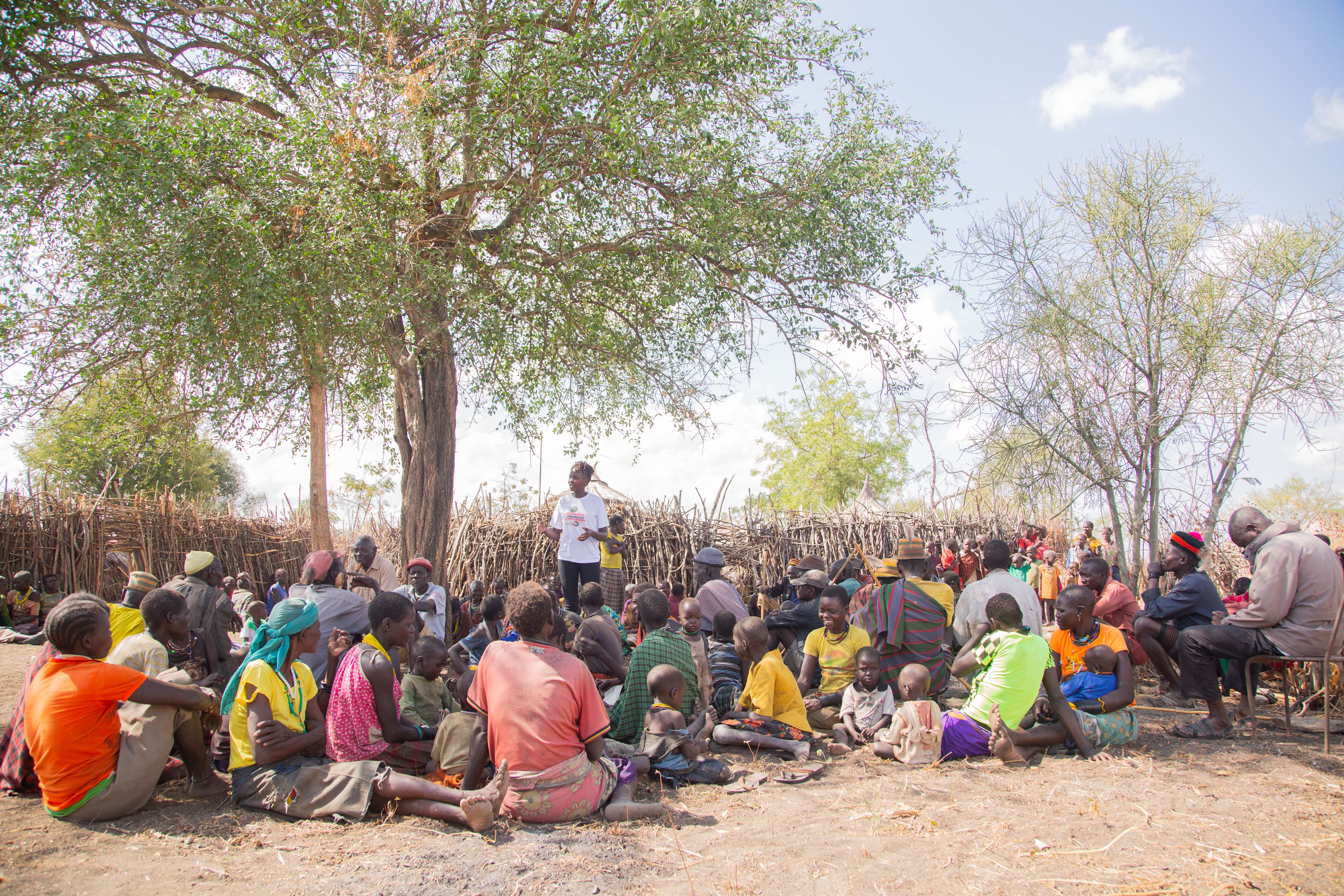
Learn what human rights advocacy is, explore four major types, and see how advocacy helps protect Indigenous land and community rights in Ghana.
Advocacy is a word used in nonprofit mission statements, university courses, public policy, and news reports. But what does advocacy actually mean, and what does it look like when people use it to protect real communities?
In simple terms, advocacy is organized action to support a person, community, or cause and influence the decisions that affect them. Human rights advocacy focuses on protecting the rights every person is entitled to, including the right to safety, equal treatment under the law, participation in decisions that affect one’s life, and— for Indigenous communities—the right to maintain relationships with traditional lands, territories, and cultural heritage.
This article explains four connected forms of human rights advocacy: community advocacy, legal advocacy, policy advocacy, and international advocacy. It also explains the difference between advocacy and activism and uses the Benimasi-Boadi land-rights matter in Ghana’s Ashanti Region as an example of how different forms of advocacy can work together.
Transparency and safeguarding note: The Benimasi-Boadi matter is sensitive and involves legal and community issues that remain subject to formal records and ongoing proceedings. Some personal details, identifying images, and unverified allegations are not published here in order to protect individuals and avoid presenting disputed claims as established facts. This article distinguishes documented records, the organization’s advocacy positions, and matters that remain unresolved.
What Is Advocacy?
Advocacy means acting in support of a person, community, or cause to influence decisions and improve conditions. An advocate might speak at a public hearing, help a community understand its legal rights, prepare public-interest communications, organize evidence, write to a government ministry, or bring documented concerns before an international human-rights mechanism.
What makes advocacy different from simply expressing an opinion is that it is organized and directed toward a result. That result might be a court decision, a change in government practice, stronger legal protection, public accountability, or greater awareness of a rights issue.
Advocacy groups and advocacy organizations often work with people who do not have the time, resources, legal knowledge, or institutional access to pursue an issue alone. Responsible advocacy does not replace the authority of courts or public institutions. Instead, it helps affected communities document their concerns, participate in decisions, communicate with decision-makers, and seek lawful remedies.
Advocacy and Activism: What Is the Difference?
Advocacy and activism overlap, but they are not identical.
Activism often refers to public action intended to draw attention to an issue. It can include demonstrations, public campaigns, community mobilization, petitions, storytelling, and social-media action. Advocacy is usually more focused on influencing a specific decision, policy, legal process, institutional practice, or accountability mechanism.
In practice, effective human-rights work may use both. Public awareness can create visibility and pressure, while advocacy can help translate that attention into documented submissions, policy changes, legal action, or institutional accountability.
The Four Connected Forms of Human Rights Advocacy
Human-rights advocacy can take many forms. The four categories below are useful ways to understand how rights-based work can move from community knowledge to legal, policy, and international accountability.
1. Community Advocacy
Community advocacy begins with the people most affected. It helps communities understand their rights, preserve their own knowledge, organize around shared concerns, and participate in decisions that affect their land, livelihoods, and cultural heritage.
In land-rights work, community advocacy may include land-law education, customary land documentation, oral-history preservation, archival research, community meetings, genealogical records, and support for community members who are engaging with public institutions.
Land Rights Defenders’ community-focused work is connected to the Benimasi-Boadi community’s effort to preserve its ancestral land, customary history, and cultural heritage. The organization’s approach is to support community participation rather than present outside actors as substitutes for the community’s own voice.
Explore Community Empowerment: Land-rights education and community advocacy programs
2. Legal Advocacy
Legal advocacy uses lawful legal and administrative processes to protect rights. It can include documenting land ownership, organizing evidence, communicating public-interest concerns, supporting legal research, challenging disputed claims, and helping communities understand the significance of court and land-registry records.
Land Rights Defenders describes this work as supporting legal efforts. That wording is intentional. The organization’s advocacy may involve documentation, communications, public education, coordination, and international engagement; it should not be understood to mean that the organization is itself acting as legal counsel in every matter or paying every litigation expense.
The Benimasi-Boadi matter involves a larger ancestral holding described in public materials as approximately 1,298.33 acres. It is important not to confuse that larger ancestral holding with the distinct 116.152-acre parcel litigated in Suit No. C1/65/2020. Those figures refer to different legal and factual contexts.
A Circuit Court judgment has been publicly reported as recognizing the Huahi Achama Tutuwaa Royal Family’s ownership and title to the Boadi lands. The family also relies on a Lands Commission search report in support of its position that its recorded rights are valid and unencumbered. Those records should be read alongside the relevant judgments, pleadings, and official documents.
The separate Benimasi-Boadi v. KNUST matter involves claims and remedies that remain matters for the appropriate court and official records. The organization’s case page should be consulted for the current procedural status rather than relying on an old article date or summary.
Read the case materials: Benimasi-Boadi v. KNUST
Explore Legacy Advocacy: Legal documentation, land-rights support, and community legal literacy
3. Policy Advocacy
Policy advocacy seeks to improve the rules, public practices, and institutional systems that affect rights. Rather than addressing only one dispute, policy advocacy asks how laws and government procedures can protect more people and prevent similar problems in the future.
Policy advocacy may include research, public-interest communications, written correspondence, policy analysis, engagement with lawmakers, and dialogue with government agencies and civil-society partners.
Land Rights Defenders’ policy advocacy includes communications and engagement with Ghana’s Ministry of Lands and Natural Resources concerning customary land rights, ancestral lands, land documentation, and the enforcement of Ghana’s land laws. Where a particular communication or submission is referenced, the organization should preserve the underlying document or official acknowledgment so that the description can be checked independently.
Explore Policy Advocacy: Policy engagement and public awareness work
4. International Advocacy at the United Nations
International advocacy brings a documented rights concern before a global audience. United Nations mechanisms do not replace national courts, but they can create an international record, invite attention to recurring human-rights concerns, and encourage governments to meet their obligations.
Land Rights Defenders engaged with the UN Permanent Forum on Indigenous Issues in three different ways between 2024 and 2026:
- In 2024, the organization made an oral intervention at the 23rd Session of the UN Permanent Forum on Indigenous Issues.
- In 2025, it made an oral intervention at the 24th Session.
- In 2026, it submitted a voluntary written statement to the Forum; this was not an oral intervention.
This distinction matters. The organization should describe these as three UNPFII engagements, consisting of two oral interventions and one voluntary written statement, rather than implying that it delivered an oral speech in all three years.
The organization’s UN-related advocacy refers to principles in the United Nations Declaration on the Rights of Indigenous Peoples, including the importance of Indigenous peoples’ relationships with their traditional lands, cultural heritage, participation, and free, prior, and informed consent. These principles provide an international framework for discussion; they do not determine the outcome of a Ghanaian court case.
See the documented UN engagement: UN Advocacy
How the Four Forms of Advocacy Work Together
The four forms of advocacy are most effective when they reinforce one another.
Community advocacy
Community members preserve oral traditions, genealogical knowledge, land boundaries, cultural history, and evidence about how the land has been used and protected.
Legal advocacy
Legal and administrative records can organize those materials into claims, responses, exhibits, and submissions that are evaluated through the proper legal processes.
Policy advocacy
The experience of one community can identify weaknesses in land documentation, public administration, customary-tenure protection, or the enforcement of existing law.
International advocacy
Documented concerns can also be presented to international mechanisms, where they become part of a broader discussion about Indigenous rights, land defenders, cultural heritage, and state accountability.
The Benimasi-Boadi matter illustrates why these forms should not be treated as interchangeable. A community’s history is not the same thing as a court judgment. A Lands Commission record is not the same thing as a final determination in every later dispute. An international statement is not a substitute for a national legal remedy. Each record has its own purpose, authority, and limitations.
Why Human Rights Advocacy Matters for Indigenous Land
For Indigenous and rural communities, land is more than a financial asset. It can hold family history, food systems, livelihoods, water sources, sacred places, community identity, and the graves of ancestors.
When land is disputed, communities may face unequal access to legal information, records, public institutions, and decision-makers. Advocacy helps close that gap by supporting documentation, strengthening community participation, connecting local concerns to lawful processes, and ensuring that decision-makers are asked to respond.
Good advocacy also requires restraint. It must protect people from unnecessary exposure, distinguish evidence from allegation, respect the authority of courts and public institutions, and avoid turning a sensitive dispute into a simplified marketing message.
How You Can Support Human Rights Advocacy
You do not need to be a lawyer to support human-rights advocacy. You can:
- Sign the petition supporting stronger land-rights protections.
- Volunteer your skills in research, writing, communications, translation, or public education.
- Ask about student internships in research, editorial, and communications work.
- Donate to Land Rights Defenders to support advocacy, community education, documentation, and related organizational work.
- Explore Art Meets Activism as another way to connect cultural work with land-rights advocacy.
Frequently Asked Questions
What is the simplest definition of advocacy?
Advocacy is organized action in support of a person, community, or cause to influence the decisions that affect them.
What are the main types of human-rights advocacy?
Human-rights advocacy can include community advocacy, legal advocacy, policy advocacy, and international advocacy through mechanisms such as the United Nations. The categories overlap and often work together.
What is legal advocacy?
Legal advocacy uses lawful legal, administrative, and documentation processes to protect rights and seek accountability. It can include organizing evidence, supporting legal research, communicating public-interest concerns, and helping communities understand relevant records. It should not be confused with legal representation by a licensed attorney.
What is policy advocacy?
Policy advocacy seeks to improve laws, regulations, government practices, and institutional systems so that rights protections apply more consistently and broadly.
Is advocacy the same as activism?
No. Activism often emphasizes public action and awareness, while advocacy usually focuses on influencing particular decisions, institutions, policies, or accountability processes. Effective human-rights work may use both.
How can students get involved in human-rights advocacy?
Students can develop experience through research, writing, communications, public education, archival work, and project-based internships. Land Rights Defenders’ student internship information explains the organization’s current inquiry process.
Stand With Communities Defending Their Land
Every well-documented record, responsible public conversation, petition signature, volunteer contribution, and donation can help strengthen the ability of communities to protect their rights.
Support the Fight for Land Justice
Your donation funds legal representation, community advocacy, and the protection of ancestral lands for Indigenous communities in Ghana.
Donate NowGet updates on land rights cases, victories, and advocacy news.
Share this article
Sharing takes 2 seconds and helps the community's story reach more people.