
Royal Blood and Stolen Birthright: The Struggle of Ashanti's True Heirs to Reclaim Their Ancestral Lands
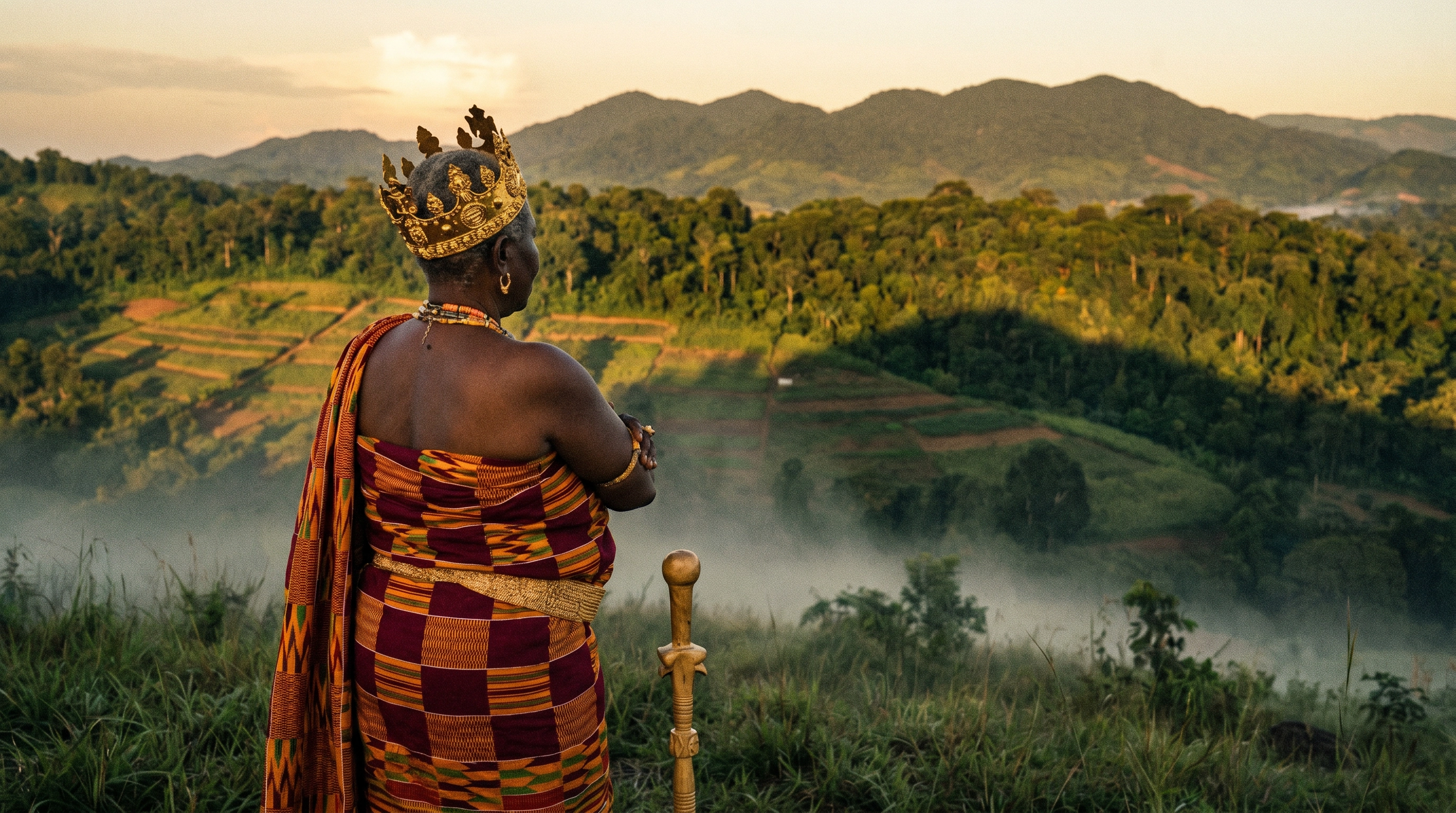
The Benimasi-Boadi people of Ghana have secured a landmark legal victory in a contemporary legal struggle to protect ancestral lands—rights that trace back to a grant by the founder of the Ashanti Empire but have come under renewed threat in recent years. Yet despite court rulings in their favor, this direct royal bloodline faces continued persecution, highlighting a profound clash between traditional power, modern law, and indigenous rights.
A Royal Gift and Ancient Lineage Under Threat
The story begins over three centuries ago with a love story at the heart of the Ashanti Empire's founding. King Osei Tutu I, who established the powerful Ashanti Kingdom in the late 1600s, granted a significant parcel of land to his beloved wife, Oheneyere Yaa Huahi Achama Tutuwaa, as a gift of affection during their marriage. This land, located in what is now known as Benimasi-Boadi near Kumasi, was not given to a stool (traditional authority position) but as a personal gift to the Queen.
"Legend has it that when he saw her, he involuntarily exclaimed 'Obaa yi fata me', to wit, 'This woman is deserving of me.'"
Their union produced a daughter, Afia Konadu Afia-Afi, establishing a matrilineal royal bloodline that continues to this day. According to court documents and family records, the Huahi Achama Tutuwaa Royal Family has maintained possession of these lands for generations, with the gift being witnessed and formalized according to traditional customs. The land itself holds profound cultural significance as it contains the final resting place of Queen Tutuwaa, making it not just property but sacred heritage.
Legal Victories Overshadowed by Continuing Struggles
In a landmark ruling on November 27, 2024, the Circuit Court in Kumasi affirmed the family's ownership of the contested lands. Judge Abdul-Razak Musah declared:
"Oheneyere Yaa Huahi Achama Tutuwaa is the owner of all that piece or parcel of land situate and lying at Benimasi-Boadi."
The court recognized Abusuapanyin Odeneho Odehyee Nanaba Kwabena Badu as the legitimate head of the family with authority to administer the lands.
This recent victory builds upon an earlier 2020 court judgment by Justice E. Senyo Amedahe, which affirmed the family's ownership of 116.152 acres — a portion of the larger 1,298-acre parcel. Despite these unequivocal legal rulings, the family continues to face significant challenges in exercising their rightful ownership.
"We, the people of Benimasi-Boadi have been subjected to intimidation, harassment, criminalization and violence simply for defending our birthright." — Nana Kwesi Osei Bonsu, Representative of the Huahi Achama Tutuwaa Royal Family
The situation has become so dire that some family members, including Bonsu himself, have had to flee Ghana to escape persecution.
A Clash of Authority: Traditional Power vs. Legal Rights
At the heart of this conflict lies a fundamental tension between Ghana's traditional chieftaincy system and modern land rights. The current Asantehene (King of Ashanti), Otumfuo Osei Tutu II, who is ironically in direct succession to the very king who granted these lands, has reportedly challenged the family's claim.
According to a petition on Change.org, the Asantehene allegedly declared:
"The lands are mine, there is no family land in Ashanti region. Therefore, no Abusuapanin have right to alienate lands to private developers... I have cancelled your family name from enjoying their inalienable rights of inheritance to the Boadi Lands."
This stance directly contradicts both historical evidence and court rulings. It represents a troubling example of how traditional authority can sometimes be wielded against indigenous land rights, even when those rights have been affirmed through proper legal channels.
The current Asantehene, who has served as the traditional ruler of the Ashanti people since April 26, 1999, wields immense cultural influence in the region. While he has been known to crack down on chiefs involved in land fraud in other cases, this particular situation suggests a complex power dynamic at play when it comes to lands with direct connections to royal heritage.
Indigenous Land Rights Under Global Scrutiny
This case emerges amid growing international recognition of indigenous land rights. The United Nations Declaration on the Rights of Indigenous Peoples affirms the right of indigenous communities to maintain connections to their ancestral territories. The Benimasi-Boadi community's struggle exemplifies the challenges many indigenous groups face worldwide in protecting their heritage.
"In the heart of Ghana, the voices of my people, the Indigenous People of Benimasi-Boadi near Kumasi, resonate through our ancestral lands, serving as a poignant reminder of the ongoing theft of our heritage." — Nana Kwesi Osei Bonsu, published in a statement on Fair Planet
The family's plight has caught the attention of international human rights organizations. Bonsu has presented their case before the United Nations, seeking support under the UN Convention Against Torture, framing their struggle not merely as a property dispute but as a human rights issue.
Preserving Cultural Heritage and Historical Truth
Beyond the legal implications, this case represents a struggle to preserve cultural heritage and historical truth. The family has taken steps to document their lineage and history, publishing accounts of their connection to the founding of the Ashanti Empire.
"Our roots, deeply entwined with the matrilineal tapestry of history, stem from a royal grant bestowed upon Queen Huahi Achama Tutuwaa, the esteemed consort of our ancestor."
This direct connection to King Osei Tutu I, who unified the Asante kingdoms in the late 17th century and created the powerful Ashanti Union, places the family at the heart of Ghana's most significant historical narrative.
The lands themselves represent not just property but living heritage. According to family accounts, fifty percent of the Benimasi-Boadi ICCA territory is earmarked for urban development by government planning authorities, while the remaining fifty percent is preserved as a natural reserve for future generations. This conservation effort showcases the family's commitment to responsible stewardship of their ancestral lands.
Media's Role in Indigenous Rights and Accountability
This case offers a compelling opportunity for investigative journalists to explore themes of power, justice, and cultural heritage in contemporary Africa. With Ghana ranked relatively highly for press freedom in Africa despite recent declines, there remains space for critical journalism that holds powerful institutions accountable.
As the Media Foundation for West Africa has noted, Ghana "has been characterized by a semblance of official aversion for critical investigative journalism." Yet this is precisely the type of story that requires thorough investigation — examining the intersection of traditional authority, legal systems, and the rights of indigenous communities.
The case also emerges at a significant moment in Ghana's relationship with its colonial past. In 2024, the Asante in Ghana commemorated the 150th anniversary of the Sagrenti War and celebrated the 25th anniversary of the enstoolment of Otumfuo Osei Tutu II. Recently, the UK returned several gold artifacts that were looted during colonial wars to the Asante royal family. This context of historical reconciliation makes the ongoing dispossession of indigenous lands all the more poignant.
A Quest for Justice and Recognition
The Huahi Achama Tutuwaa Royal Family's struggle represents more than a land dispute; it embodies fundamental questions about heritage, justice, and the rights of indigenous communities in the modern world. Their story connects the founding moments of one of Africa's greatest empires to contemporary struggles for human rights and dignity.
Despite winning multiple court cases affirming their ownership, the family continues to face challenges in exercising their rights to their ancestral lands. Their persistence in the face of powerful opposition speaks to the profound significance of these lands to their identity and heritage.
As this case unfolds, it offers journalists, human rights advocates, and the international community an opportunity to support indigenous rights and ensure that historical truth and legal justice prevail over arbitrary power. The royal bloodline of Benimasi-Boadi deserves not just recognition of their legal rights but respect for their place in Ghana's rich historical tapestry.
The Royal Lineage: Documented Proof
The following family tree, published in the Ghanaian Times on August 14, 2021, documents the royal lineage and biological descendants of Otumfuo Osei Kofi Tutu I through his wife Nana Yaa Achama Tutuwaa. It traces seven generations of the matrilineal bloodline and identifies the Principal Elders of the Huahi Achama Tutuwaa Royal Family.
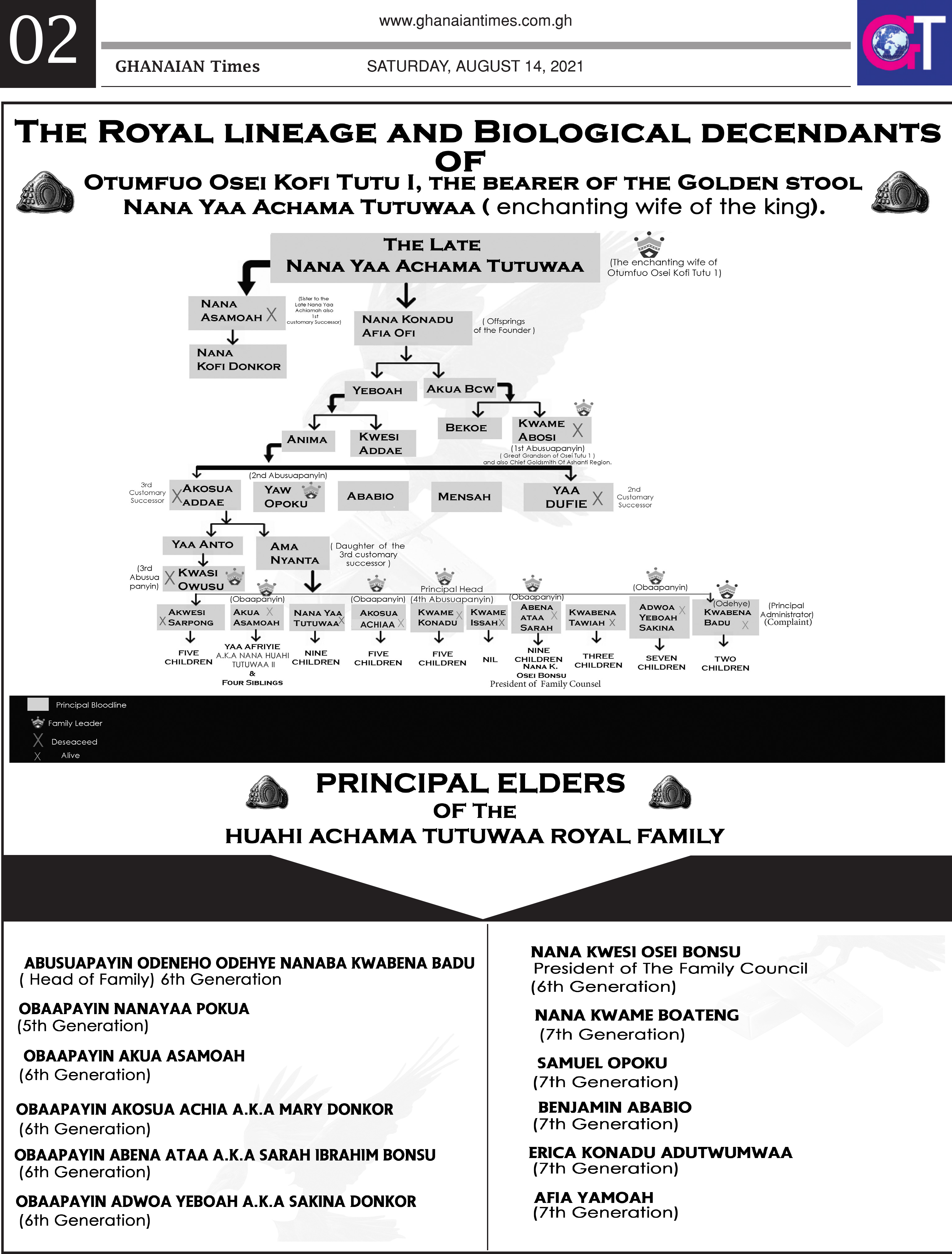
Source: Ghanaian Times, Saturday, August 14, 2021 — Page 02
Support the Fight for Land Justice
Your donation funds legal representation, community advocacy, and the protection of ancestral lands for Indigenous communities in Ghana.
Donate NowGet updates on land rights cases, victories, and advocacy news.
Share this article
Sharing takes 2 seconds and helps the community's story reach more people.